Sunday, June 22, 2014

Day #6: Bo Kaap & the Slave Lodge

Hey everyone!

I've been off the grid and away from internet the last couple of days, so let me get caught up with posts and what I've been learning!

Day #6: Thursday, June 19

Yet another great, thought provoking day!

We started off with a final nice breakfast at the great boutique hotel where we have been staying the last couple of nights.  Everyone has been so friendly, we've met some nice fellow travelers, and it's been nice (though tiring as well) to be right in the heart of Cape Town.  Then, off to do some exploring in the Bo Kaap neighborhood.

Bo Kaap literally means "above the cape."  It was one area where former slaves (black Africans and colored people) were allowed to reside, as at that time the neighborhood on the side of Signal Hill was far out of the city of Cape Town, a whites-only area.  Because slaves were forbidden from wearing colored clothes, they chose to live vibrantly in their new, free lives - painting their homes the most beautiful vibrant colors.  Now, as Cape Town has grown, Bo Kaap is right in the heart of the city.  It is home to the Muslim community of Cape Town, and such a lovely place to walk around.  I don't think I've seen such brightly colored homes one right after another!  Of course I went crazy with my camera! :-)  We learned also that Bo Kaap is facing issues with gentrification.  What was once an area considered far from anywhere desirable to live, is now a beautiful and vibrant community right in the heart of Cape Town.  Some of the original residents fear being pushed out of their homes by others looking to get a spot in this picturesque community.  I do hope that this community won't lose its heritage and its originality, and that those who choose to call it home will always have the opportunity to!  (And...I'm reflecting on changes in my own neighborhood as I think about this.  So many connections between here and there!)

We spent the rest of the morning at the Slave Lodge museum - going back in time from Bo Kaap into the world of slavery in SA.  This museum is located in a building that was literally called The Slave Lodge - described as a "shameless fortress of human misery."  It's exactly what its name implies - a fortress of a building that where the slaves of the 17th and 18th centuries lived, worked, and died.  After slavery was banned in the British colonies, the Slave Lodge became home to government buildings, but it has now returned to an echo of its former space - using halls once filled with anguish and torture to teach about the past and advocate human rights.  Poignant...

The history of slavery in South Africa is very reminiscent of the slavery of American history.  The museum pointed out that slavery was present in many different cultures, in many different locations around the globe, from ancient times to present day.  What an awful stain on the history of humanity!  Slavery took root in Cape Town when the Dutch East India Company needed workers to tend the gardens, build, and repair ships at the "refreshment station" on the Cape.  Spice traders would stop at the Cape en route to their shipping destinations, and slaves were "needed" to build the infrastructure to make this happen.  Many of the slaves housed at the Slave Lodge worked in the Company Gardens - a large garden area where a stream was rerouted from Table Mountain and fruits and vegetables were grown (A portion of these gardens remains today - they are outside of the parliament building and absolutely gorgeous!)

The majority of the African slaves came from Mozambique and Madagascar, although there were also slaves from Asia and Indonesia, and eventually the local Khoikhoi were used as indentured servants.  Interestingly (and absolutely bizarre!), because the slaves were so diverse, it was impossible to tell walking down the street who was a slave, and who was not.  (If you can't tell that someone is different from yourself, how can you possibly feel it's acceptable to enslave them?!)  As a result, slaves were not allowed to wear shoes, colored clothing, and many wore wide straw hats as a symbol of their status.  Slaves outside the lodge were also required to carry pass books - an erie foreshadowing of what was to come...

As in American history, slaves in SA were treated horrendously.  Many, many died in the horrible conditions on the slave ships, and those who made it to the Cape lived an awful existence - working from sun up to sun down, losing their children or spouses to the slave trade, physical punishment and torture, rape, imprisonment...the list goes on...  One quote in the museum reflected on those involved in the slave trade.  "When they (the slave traders) embark on this unworthy trade, they must divest themselves of every human idea; their hearts must be steeled by insensibility and their crew must be equally callous to the finer feelings of humanity." ~Samuel Hudson, Cape Town resident.

One of my favorite little sections of the museum was a column filled with names of some of the slaves of the Slave Lodge (poor records make it impossible to know all of those who were enslaved there).  It had rings like trees, and really brought to mind the depth of injustice and the ripple effect it has on individuals, families, communities, and countries.  In the background was a portion of a poem commissioned for the musuem.  It really rang true to me, to why it's important to consider the history of injustice, and take the time to look back even as we so strongly desire to move forward:
In the light of memory and remembering
Through the streams of our senses
Reconnecting
Recollecting
We find our way home
~from Slave Dream by Malika Ndlovu

Another highlight was an artistic installation by Keith Dietrich called "Fragile Histories - Fugitive Lives."  It was a beautiful recollection of the humanity behind injustice - drawings of human hearts overlaid with names and criminal sentences of those enslaved.

Despite its atrocities, the history of slavery has contributed to the culture of South Africa.  South Africa refers to itself as a melting pot - a fascinating combination of African, Dutch, British, Indonesian, and Indian cultures.  The evidence of this convergence can be seen in the street names and architecture, heard in the language and music, and tasted in the food.  It's a really fascinating place!!!  As the Slave Lodge reminds visitors, "we are, because of them."  Ubuntu...

On a side note, we ran into a group of 8th grade students and their teachers at the museum.  We were able to chat with them a bit and learn about their school and education system.  They were from a Cape Town public school, made up of diverse students from the surrounding area (though very few white students were in the bunch.)  The teacher shared with us that their school became "multicultural" even before it was law.  Believe it or not, schools in SA were legally segregated until 1994.  This school chose to desegregate in 1990.  (It's harrowing to realize that I could, and probably would, have attended a segregated school for part of my life had I been born a South African!)  She also shared that as students can choose any school they wish to attend, there is a trend where everyone tries to go further and further "up the chain" to get to the best schools.  As a result, those who could moved away from their school and towards a school they thought was better.  Then, students at a school "below" this one, moved "up" and so on.  I am interested to learn more about this as I get into more education conversations next week...

The teachers were just over a week away from their 3 week holiday, and exhausted as teachers are everywhere when the end is in sight!  They also shared a lot about how hard they work - all the overtime that they put in without compensation and how much work they take home.  Sounds like an international truth of teaching - the dedication always outweighs the hours in the contract!  :-)  The students were in the midst of a unit on slavery and were eager to share their knowledge with us of the Underground Railroad and Harriet "Hubman," as one student proudly shouted out.  It was a fun surprise chance to chat and learn and share!

We decided to grab lunch on a patio at the V&A Waterfront again - it's so beautiful and fun to stroll and people watch there - reminds me a lot of Fisherman's Wharf in San Francisco.  I was also able to connect and finalize plans with a few of the education contacts I will be seeing while I'm here - 3 visits confirmed with educators/those in the education world for next week!  I'm greatly looking forward to connecting the backdrop of what I'm learning with their qualitative perspectives on life and education in SA today!

It's amazing to think I left home just one week ago today!  I've been able to fit in a lot of learning, thinking, and adventuring in the last seven days.  The next couple of days we will explore Stellenbosch, a lovely area less than an hour outside of the city (though it feels like a different world altogether!), home to the seminary where Apartheid was advocated as a religious ideal, and also home to the heart of the Cape Town wine country.  Even in winter, it's an absolutely gorgeous area!  I'm looking forward to a few nights in a country cottage as a midway time to reflect on all that I've been able to see and learn this last week!  No internet there, so I'll post as I can.

Connect again soon!

~emily~

Wednesday, June 18, 2014

Day #5: District Six

Today we got a taste of what South African winter looks like - 50's and pouring all day long!  So, we took the chance to learn a little bit more about the inhumanity of Apartheid at the District Six Museum.

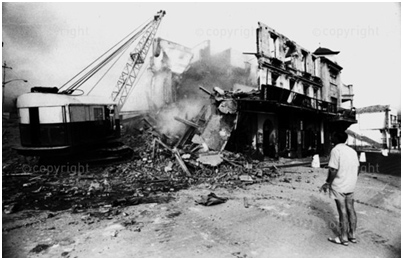
District six is one of the neighborhoods in the heart of Cape Town.  Although it is mostly just grass and open space today, it was once filled with working class people who lived as members of a vibrant, thriving community there.  However, District Six became one of 42 sites in the Cape Town area in which people of color and black Africans were forced to leave their homes and relocate to government housing outside of the city.  The residents of District Six were some of the 3.5 million people forced out of their homes during the Apartheid regime.  The District Six museum tells the story of this devastated community.

The first official forced removal in the Cape Town area happened in 1906.  Bubonic plague had traveled across the ocean through rats living in the hay brought to feed colonialist's horses.  But, when people started getting sick, it was the Black Africans who were blamed.  They were relocated away from the city, and all of their possessions were burned.

Just over four decades later, as the Apartheid government began its reign, legislation was passed in 1949 banning marriage between the different race groups.  The basic premise behind Apartheid legislation was that people of different races were too different to possibly live together.  Yet, people all over Cape Town were living in such a way that showed that this thinking simply wasn't true.  The government did not want communities made up of people of different races living together, and as a result, neighborhoods and communities were relocated and demolished between the 1960's and 1980's.

The story that the District Six museum tells is poignant - through pictures and mementos, one is drawn into the living, breathing, community of the place.  District Six was home to 60,000 people.  It was a world where people worked, played, had babies, danced, celebrated birthdays, got married, visited the barbershop, listened to jazz!  It was home - a home of friends, families, neighbors, workers, children...people.  The photos all around the museum speak to the lives that once played themselves out on the streets of District Six - the streets which now lie empty and lonely.

When the community members of District Six began hearing whispers and receiving notices that they were to leave, nobody could believe it - where would everyone go?  It seemed there was no way that the government could force so many people leave their homes.  Yet, that's exactly what happened.  People had to leave the houses in which they had raised their children, leave the neighbors they had come to share their lives with, leave their locations close to work and schools - the loss was total.  As homes were packed up, bulldozers followed.  By the 1980's the destruction was complete.

Some effort has been made for reconciliation around District Six.  The museum is an important landmark that has collected its stories (some ex-residents have even published books or films of their stories), and has held events to try to help people heal.  Yet, there is clearly still much pain in the memories of this community.  

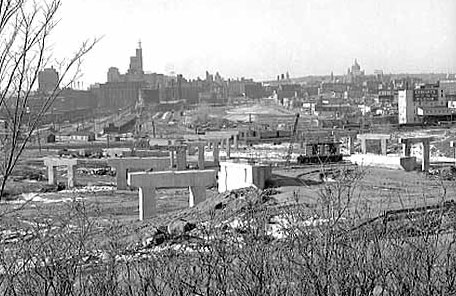
As I walked through the museum, I was reminded of the Rondo neighborhood of Saint Paul.  Although the circumstances differ, I believe that there are commonalities in the injustices of these experiences.  During the 1960's, Interstate 94 was constructed in Saint Paul, right through the heart of Rondo.  Rondo was also a tight knit, vibrant, thriving community - made up of primarily African Americans.  It was a middle class neighborhood that functioned independently of the white neighborhoods surrounding it.  Families that had been a part of the community for years and years, as well as those just arriving from the South - everyone had to go.  Community members who refused to sell their homes were forcibly removed, and compensated at a fraction of what their homes were worth.  Construction ripped its way right through the Rondo community - and sent its community members into the segregated housing market and away from their families, friends, neighbors, and community.  Some interesting (and heartbreaking) parallels... 

After checking out the museum, we strolled into the Grand Parade to get a glimpse of a local market.  We stood in the square where 200,000 people gathered in February of 1990 to hear Nelson Mandela speak from the balcony of City Hall after being released from Robben Island.  

We also got caught in a crazy downpour which left us soaked and shivering!!!  But, nothing that a good cup of rooibos tea can't fix!

Another great day - lots to think about, lots to reflect on, lots to remember as consider how injustice can have longstanding impacts on communities.  It's heavy, but so significant.  As I have often heard spoken of here, if we don't understand our history, how can we move forward?  I continue to be incredibly thankful for the opportunity I have to understand South Africa's history and the ways it will help me move forward in my own work.

More to come!

~emily~

Tuesday, June 17, 2014

Day #4: Exploring Cape Town

What an awesome day we've had in this incredible city!!!  I think I may never leave...

Although we had originally planned to start on some of the city center museums today, with a 90% chance of rain tomorrow we rearranged our plans and enjoyed the sunshine today instead!  We spent the day seeing the cape peninsula area, as well as a little bit of the city along the way.

We started at the Kirstenbosch Botanical Gardens, an incredible landscape of rolling foothills and beautiful plants.  We walked for hours, taking in the landscape and the beauty surrounding us.
Table Mountain and its surrounding mountains stand above you as you travel around the cape and through the gardens - absolutely beautiful!  We learned in the gardens about the many indigenous as well as non-native plants that exist in the area. (Did you know that all geraniums originate from the area around Table Mountain?!)  The land on which Kirstenbosch sits (as well as the majority of the land around the area) was once owned by Cecil Rhodes, (yup, the guy who Rhodesia --> Zimbabwe was named after!)  a successful/ruthless entrepreneur who had grands plans of British colonization of the entire continent.  Incredibly wealthy, Rhodes left specific plans in his will for how his land and assets should be divided.  Luckily, these gardens were a part of his plan - and what a beautiful part they are!!!  We loved seeing the lush landscape of this beautiful region.

This region was originally inhabited by the Khoikhoi people.  Although they at first tolerated visitors to the cape, seeing it as a stopping point for trade routes, slowly their land began to be taken from them.  As they realized what was happening, the Khoikhoi first traded with the Dutch colonialists, and then tried negotiating with them.  This eventually broke down, and war ensued.  Although I have yet to learn a lot about this history, it seems like an unfortunately similar story to many places in the world where indigenous people were pushed out by colonialists.  Just like America, South Africa has not only the apartheid injustice in its history, but also this original forced removal of the country's first inhabitants.

On the way to the gardens, we drove by the hospital where the first heart transplant was performed (though passed on the opportunity to see the operating room and life size replicas of the surgeons and patients....) as well as the barren District Six - one of the only open field areas within the city center.  District Six was once a vibrant community, until Apartheid forced the relocation of 60,000 colored South Africans to areas outside the city.  Their homes were bulldozed behind them, and the emptiness that remains is another reminder of the injustice that lies in much of SA's recent history.  More on that tomorrow, when I visit the District Six museum! We also saw the Mount Nelson hotel, one of the most famous hotels in the region, hosting many internationally known guests throughout history.  Apparently one day someone reported a vagrant on the hotel lawn, who turned out to be John Lennon meditating in the grass!

From the gardens, we traveled on to check out a number of the views around the peninsula - the wine country of Constantia, Hout Bay, Sea Point, Three Anchor Bay, and Green Point.  We spent a bit of time strolling (maybe frolicking is a more apt description - I get veritably giddy by the sea!) on the Hout Bay beach, and enjoyed learning about the quirky community - they declared themselves a republic in the 1980's, complete with their own tourism passports!  Legend has it that someone was once able to travel the world on their Hout Bay passport, without any officials noticing!  We basked in the sun, enjoyed the waves, took in the scent of the sea, and enjoyed the spectacular views!  It was lovely - lovely - lovely!!!


We also passed by the township of Imizamo Yethu (meaning "our struggle.")  It's amazing that some of the wealthiest areas sit mere kilometers from some of the poorest.  South Africa is definitely a study in contrast - beauty and desolation, injustice and triumph, hardship and hope, wealth and disparity.

We learned about two Imizamo Yethu domestic workers who decided to take on a project they are calling "On Top of the Mountain."  These two women climbed Table Mountain, and then determined to summit the highest peak on each continent.  They have checked off Kilimanjaro, a peak in Argentina, and are planning for Everest.  If they succeed in their goal, they will be the first black women to summit the highest mountain in the world!  They have set out on this tremendous undertaking to show South African women the great things that are possible for them, even despite hardships!  Wow!!!

We ended our day at the V&A Waterfront - a lovely harbor area in the shadow of Table Mountain.
It's a beautiful area to stroll around, shop, eat, and enjoy the views.  We'll be back here a number of times during our visit, especially to take the ferry to the Robben Island prison/museum.  Tonight, we explored the canal (Oprah is rumored to have a penthouse apartment here!), walked along the boardwalk, wandered through the shops and markets, and ate at a great Portuguese restaurant right along the water.  It was lovely to reflect and take in the sights as the sun went down on the harbor.  (As it's winter here now, our patio dining was equipped with heaters and blankets!).  A delicious evening, in so many ways!

Tomorrow we'll don our rain jackets and explore more in the city center.  We have plans to see the Slave Lodge Museum, District Six Museum, St. George's cathedral, and a local market that's only a couple of days a week.  Can't wait to share about all I am learning and seeing!

~emily~

Monday, June 16, 2014

Day #3: Arriving in Cape Town

Hello from Cape Town!

After a rough night of sleep last night (I think that jet lag may have finally caught me!) we found our way back to the airport, onto our plane, and into Cape Town!

We decided to take a bus from the airport into town, and walked with our luggage (little PCV flashback there!) until we got to our hotel - a great spot right in the heart of the city.  After getting settled, we grabbed a bite to eat at a cute little Tapas restaurant, and then spent a little bit of time exploring the city.

My first impression of Cape Town: what a lovely, lovely place!!!  The architecture is beautiful, Table Mountain is gorgeous, there are so many interesting places we have strolled by...I can't wait to explore more!

But...for tonight...resting, planning, and getting back into a normal sleep schedule! :-)  I've got popcorn, rooibos tea, my already well worn Cape Town guide book, and there's a marching band playing American pop songs on the street below my window (so much for that sleep, eh?)!  I'm good to go for tonight!

More to come tomorrow!

~emily~

Day #2: Jozi & Soweto

Today we had the awesome experience of taking a hop on/hop off city bus tour through Johannesburg and the township of Soweto.  We learned so much about the history of both of these communities, and really enjoyed the opportunity to sit back, relax, and listen as we watched the city pass us by.

We started our tour back at the Apartheid Museum, where we caught the bus and headed into Jo'burg proper.  The first interesting thing I learned was that Johannesburg goes by many names - Jo'burg, Jozi, the City of Gold...Although it's official name is Johannesburg, historians aren't certain which Johanne the city was named after.  Jo'burg is located 1700 meters above sea level, and is a metropolis 4 times larger than London.  It contains between 2-12 million people, depending on which survey you reference and how wide they consider the range of the metropolis.  Jo'burg appeared to me to have a central down town region, with many sprawling areas beyond.  The central downtown area is crowded and urban, but the surrounding areas still have lots of open space and grasses all around.  The tour described Jo'burg as being an improbable place to live - so high above sea level and the only of the world's largest 50 cities to be built not near a water source.

As we learned previously, Jo'burg sprung up largely as the result of the discovery of gold in the 1886.  The landscape still bears the evidence of these beginnings.  The landscape surrounding Jo'burg is dotted with golden, sandy hills.  We came to learn that these are not actually natural hills, but the mounds of dirt which were dug up as mines were built.  You can also see the remains of different mining shafts peeking above the ground all around the city.

As we rode into the inner city of Jo'burg, I was struck by how similar it felt to parts of Kampala, Uganda.  Having lived in Uganda for 2 years and traveled through it's capital city many times, some of the sights of Jo'burg felt so familiar - little shops on the first floor of buildings, matatus (mini buses) criss crossing through different parts of the city, the contrast of urbanization and development...And many, many people!  The fact that we were touring on a Sunday meant that parts of the city were much quieter (in Uganda we always preferred to travel on Sundays for this very reason!)  Our bus tour described these parts of the city as having the "buzz of an African city" - this felt very familiar as we drove through.  The biggest difference from Kampala?  No boda boda motorcycles!!!  Joining us on the road were many taxi buses, and we also saw the large train station, which transports many urban commuters into the city each day.  During the Apartheid regime, the city was a whites only region, as were the city buses and trains that connected it.  As a result, taxis sprung up as the only way to transport blacks into the city for work.  They have remained a significant aspect of transportation within Jo'burg.

Additionally, we saw the buildings which issued the infamous passbooks to black and colored citizens during the Apartheid regime.  Those workers who came to the city were required to have passbooks (identification).  Police routinely checked for passbooks and heavily persecuted those who did not have them.  Not far from there, we passed the jails and the magistrate courts, home to many legal decisions and consequent jailings during the anti-apartheid movement.  Towering over all of these, is the imposing structure of what was once home to the Apartheid regime offices.  This building was built almost like a long wall - the tour described it as being a visible reminder of power to all those who saw it.  As I looked at it - all I could see was fear and insecurity - as if a building could create power that should never exist.  At the museum the previous day, one of the Apartheid leaders was quoted as describing the need to dominate 80% mentally, since the white population was only 20%.  This building was a testament to that attempted domination, yet only served to remind me of the fear of those who attempted to lead so corruptly during that period.

Also on our tour we passed "Wits," a large university of 29,000 students and notable alumni including 4 Nobel Prize winners and the first female math PhD in South Africa.  We also passed through Ghandi Square, where Ghandi one practiced law in Jo'burg.  Neither Ryan or I realized that Ghandi spent more than 20 years living and working here, and many of his experiences of discrimination shaped his ideas and the ideals he came to peaceably fight for.  We also saw the Carlton hotel, the tallest building in SA, and now home to the local tax collection agency.  "A visible reminder that you can't hide from the tax man," as our tour described it.

One of my biggest takeaways from the Jo'burg tour was the emphasis on contrasts.  The audio tour described Jo'burg as a place that testifies to the horrific and the triumphant, the incredible strife yet incredible opportunity also present there.  This came through so clearly - it's a city filed with hope, yet a city bearing so much pain as well.  The tour asked visitors to reflect on the question of how anyone could love a place where so many awful things had happened, and encouraged us to see that the people of Jo'burg are what make it beautiful.  Only through healing together can the ever-growing Jo'burg create a new history for itself.

Then...on to Soweto.  We had the opportunity to travel through Soweto with a local guide who shared a wealth of information on Soweto's history and current experience.  We also had the crazy coincidence of meeting a Ugandan couple, from the very same neighborhood we lived in during our homestay in Uganda!  A reminder of what a truly small world it is!

On our way towards Soweto, we had the chance to stop at the FNB soccer stadium, home to the 2010 FIFA World Cup!  It's a really interesting looking stadium, designed to have the look of an African calabash.  It was also the site of Nelson Mandela's memorial service this year.  It has a capacity of 90,000, one of the largest stadiums on the continent.  At Mandela's memorial, it was full to capacity and another 60,000 people overflowed outside.  I can't imagine being there at either of these momentous events!

Then...on to Soweto.  Soweto (short for Southwest Township) was a community designed to house the black Africans who worked in Johannesburg.  Historically, black workers were not allowed to live in Jo'burg.  So, the government created hostels to house those working in the mines.  Conditions there were awful - when the night shift workers went to work, the day shift would take their beds, and life there was very unsanitary and uncomfortable.  As the number of workers grew, so did Soweto.  Now, as you drive through the streets, you see stark contrasts between the different groups of people who live there.  On one side of the street, you see the upper class homes, contrasted sharply with the middle and lower class homes just across the street.  The lower class is primarily made up of the people who work in the city's recycling system.  They live in tiny homes of sheet metal walls with no electricity or running water.  In other parts of the community, middle class landowners rent space on their property for poorer households to construct a shack.  These illegal arrangements share toilets and electricity, and are an expensive alternative for those of the lower class.  Although the conditions in the lower class part of the township are very poor, they are reminiscent of sights in other developing countries I have visited and lived in.  The most striking difference between these familiar communities and Soweto is the simple fact that this community was created as the legally forced home of black africans, while white Afrikaaners lived in comfort and privilege mere kilometers away in Jo'burg.


 Soweto now is home to between 4 and 6 million people (more than in Jo'burg proper!), and includes people of upper, middle, and lower classes.  Although it was created to racially divide the people of the Jo'burg area, now all are welcome here, and 20% of its current population is now white.  Soweto includes everything you might expect to see in a town - churches, schools, petrol stations, and one of the largest hospitals on the continent (serving over 6,000 patients each day!).  It is still home to Winnie Mandela, and members of Desmond Tutus family.  It is also the only place in the world where two Nobel Prize winners have lived so close - The homes of Desmond Tutu and Nelson Mandela are literally just down the block from each other, and we had the neat opportunity to get to see both.

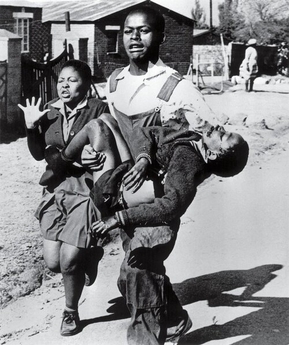
Soweto also became a hugely significant location during the struggle for freedom during the Apartheid regime.  It was in Soweto on June 16, 1976, that the young people started an uprising which had a monumental impact on the movement.  A group of students decided to protest because their instruction at school was in the language of Afrikaans, the language brought by the Dutch, and which they could not understand.  The gathering gained momentum, and soon 20,000 students and young people gathered to march to the Orlando soccer stadium.  They were soon stopped by police, and while waiting for other students to join them, a police warning shot set off a panic and the students began throwing rocks.  Police responded with gunfire, and before long over 140 students were dead.  We saw the bridge on which the first student victim was shot, and visited the Hector Peterson Memorial - a monument to these courageous students and named after the 6 year old child who became of one of the first young victims of the 1976 struggle.

After being at the Apartheid museum and seeing footage of the 1976 uprising and following political activism in Soweto, it was inspiring to travel on its streets and imagine the significant and troubling events that took place there years ago.

So - a very full, very educational, and very great day!  I felt privileged to have the opportunity to get a glimpse into the history and modern reality of Jo'burg and Soweto, and continue to feel awed at all of the pieces of the puzzle of South Africa's journey of human rights that I am getting to experience.

Until next time!

~emily~


Saturday, June 14, 2014

Day #1 - Exploring Bryanston & the history of Apartheid

We started our first full day in South Africa with a lovely breakfast at our B&B - guava juice, cappuccino, fried eggs, grilled tomatoes, toast with Nutella, and passion fruit!  So many of the things we missed from our time living in Uganda!  We then got ourselves settled with reception (since it was too dark to do that last night!) and made some plans for our 48 hours in Jo'burg.

We started off our exploring at Bryanston Organic Market - a lovely outdoor market open 2 days a week.  It has everything from local African crafts to fresh organic fruits and veggies and fancy french pastries!  It was really wonderful to walk around and enjoy chatting with the vendors and perusing the different stalls.  We found ourselves the fixings for an awesome picnic lunch - fresh baked baguette   (supposedly the best in Jo'burg), blue cheese, hummus, and a belgian chocolate brownie for dessert!  It was a beautiful morning soaking up the local flavor and admiring all of the beautiful crafts and foods.


After that, we used our new found Jo'burg navigational skills (much improved since yesterday, I should add) to spend the entirety of the afternoon at the Johannesburg Apartheid Museum. 

The Apartheid Museum is an internationally known museum that traces the history of the Apartheid from hundreds of years ago to today.  What an incredible few hours we had there!  Upon entering the museum, the first thing that struck me was 7 large pillars standing over a reflection pool in the courtyard of the entrace.  Each had a different word on it - democracy, equality, reconciliation, diversity, responsibility, respect, and freedom.  Each of the pillars stood for one of the fundamental values of the new South African constitution.  On a wall nearby, a quote by Nelson Mandela read: "To be free is not merely to cast off one's chains, but to live in away that respects and enhances the freedom of others." What beautiful principals and words on which to found a country.  

After that, we headed into the musuem.  Our tickets had randomly assigned us as "white" or "non-white" and we had to use the corresponding entrance to begin our tour.  I was assigned non-white, so I parted from Ryan and took my separate way into the museum.  I walked through a corridor of faces of ID cards of other nonwhite South Africans - this was an interesting way to enter the museum in the mindset that color was a significant dividing factor throughout much of South Africa (and America's) history.

The museums walks its guests through the Apartheid   history starting at the beginning of Jo'burg's population boom - when gold was discovered and a wide variety of people rushed to the area to try to get in on the fortunes that awaited.  From there, it goes on to describe the emergence of slavery, the beginnings of the Apartheid movement as a political strategy, and the various leaders who emerged on both sides of the struggle for equality.  It was an incredibly well done museum - absolutely packed with information and so, so many things to think about.  I'll try to list a few of my key insights and thoughts while I went through - there was just so much there!
  • Slavery in SA:  I've always found it absolutely absurd that people would believe that they had the right to enslave a fellow human being, but while watching a movie near the beginning of the museum, it struck me as especially odd that this would have happened right here in Africa - African people enslaved by African settlers, to work the land that was already theirs, for the profit of someone else.  What a bizarre injustice that European settlers would arrive in this land and feel that they had the right to capture and enslave the native people who lived here.  Absurd!  Disturbing!  This is obviously not a new revelation, but being here in Africa and thinking about it, it struck me anew as completely outrageous.  How has slavery been such a significant apart of world history?!  I'll be learning more about SA's history of slavery at the Slave Lodge museum next week, so more pondering on that to come I'm sure...
  • The transition from segregation to apartheid:  I didn't realize that SA started with a policy of segregation - as more people of all races moved into the cities, leaders tried to develop a way to "deal with" the diversity present in the cities.  What started with segregation, including burning areas where people had chosen to live in diversity, took a significant turn towards apartheid when the white leaders in power didn't feel that segregation was firm enough to keep people of different colors separate from one another.
  • Nelson Mandela:  Wow!  Such an incredible leader and an incredible man!!!  What an experience to be able to learn about this amazing man just months after he passed on.  We got to visit a special temporary exhibit on Mandela, describing his role as a character, comrade, leader, prisoner, negotiator, statesman.  It was powerful to follow his story from the son of an African chief in rural SA to his leadership of this incredible country.  It is also amazing to consider the ways in which he was able to take the lead in this divided, grief stricken country, and turn it into a place where everyone can thrive!  At the end of the exhibit were many favorite Mandela quotes (I love quotes!).  Here are some of mine:
    • "There are few misfortunes in the world that you cannot turn into a personal triumph if you have the iron will and the necessary skill."
    • "The first thing is to be honest with yourself.  You can never have an impact on society if you have not changed yourself"
    • "I will support my friend even if he has been deserted by the entire world"
    • "Running through the struggle like a golden thread was the indomitable human spirit and a capacity for self-sacrifice and discipline"
  • People's willingness to give their lives for the cause:  As with many revolutions and struggles for justice, the sheer number of people who suffered and died for this cause was staggering.  In one room, 130 nooses hung from the ceiling, each representing a different political leader who had hung for their involvement in the anti-Apartheid movement.  From there, we walked into an area with replications of solitary confinement cells - tiny, windowless spaces where political prisoners could be held any where from 60 - 540 days (without trial!) for their supposed involvement.  This was so, so sobering...
  • The turbulence of the later years of Apartheid:  We learned today that more people died in final four years of Apartheid than the previous 42 years in which Apartheid existed.  As different groups vied for power and stakes during political negotiations of the time, crazy violence and unrest ensued.  During one part of the museum, we walked through a hallway with images and artifacts from political leaders trying to sort things out.  Through windows in the hallways, we could observe video footage of what was happening in the world outside - riots, violence, weaponry trainings, etc.  It was powerful.  I guess it just goes to show that even when so much progress has been made, there can still be  long way to go.
  • The power of youth!: In the anti-apartheid struggle, the young people of SA played a huge part.  Tomorrow celebrates the anniversary of the youth uprisings in Soweto, a township near Jo'burg, where young people rose up against the injustice they faced.  We watched video footage of young people throughout the 1970's and 1980's that showed their impact on the movement.  Without becoming violent, they became "ungovernable" - thus destroying the power that the corrupt political leaders held.  It was powerful to see how even when the 'big guns" were in prison, the young could act and create change that created a turning point in the movement.
  • The unfortunate commonalities of oppression:  I've had the amazing experience to get to visit many monuments to overcoming injustice around the world.  During my time in the museum, I was reminded of other halls I've walked through in other museums around the world that celebrated the victories of other groups in the face of awful oppression.  From the DC Holocaust museum to the Rwandan Genocide museum in Kigali, it is disheartening to realize the many ways that people all over the world have done horrific things to one another.  As I walked past pictures of unnamed people knowingly participating in a world that did such awful thing I just kept thinking - how could you?  How can so many take part in such devastating acts against fellow human beings?  It's saddening to realize the things that we are all capable of, and a good reminder to always be fighting and living in a way that creates justice and empowers everyone to live the life that they deserve.
After lingering in the museum until they closed the doors, we enjoyed a dinner and great debrief conversation at a restaurant near our B&B.  As we were getting close to finishing our supper, we noticed the nearby grocery store was closing its doors.  Having my heart set on a Magnum bar to finish off my night, I ran next door while Ryan paid the bill.  Have no fear - we will soon be finishing this extraordinary day with two fresh Magnum bars! :-)  It's the little things, right?

Tomorrow we will get to visit Soweto, the sight of the youth uprising in 1976, as well as tour the sights of Johannesburg.  We've been in the country only 24 hours, but have already learned and seen so much!

Until tomorrow.....thanks for reading!

~emily~

PS - one more quote to leave you with from today:

"Good moral character is not something that we can achieve on our own.  We need a culture that supports the conditions under which self love and friendship flourish." ~Aristotle

Friday, June 13, 2014

In SA!

We have made it to Johannesburg!

Our adventure so far...On Thursday morning, the alarm went off at 4:30 and we got ready to head to the airport.  Our trip on the city bus was flawless, and we were able to get great seats together on our 7:30 flight to Atlanta (huge thanks to Ken!)  We arrived in Atlanta and had eight hours before our flight, so decided to take the day and explore the city of Atlanta a bit.  We hopped on a MARTA train, took in the sight of Olympic Centennial Park, and decided to splurge on a trip to the Georgia Aquarium, a big location on Ryan's bucket list as he's always wanted to see a whale shark.  (spoiler alert: we saw four!)  After a few hours exploring the aquarium, we headed back out into the southern sunshine and walked all around the center of Atlanta, grabbed lunch on a patio, and took the train back.  It felt like a bonus day - getting to see a fun American city en route around the world!

We got great seats on our flight to Johannesburg and after a brief lavatory malfunction were on our way...and 15 1/2 hrs later we arrived in Joburg!  On the flight we talked, read, watched movies, and even managed to sleep!  I got to watch an interesting TED talk called "Lessons from Mandela" to get me in the mindset of what we would be heading into when we arrived.  The speaker talked a lot about "ubuntu" - the African idea that we define our personhood through our relationships with other people.  I am interested to see what this has looked like throughout South Africa's history and how it plays out today in post-apartheid South Africa - one of many ideas to be thinking about and lessons to be exploring during our time here!

We had a bit of an adventure finding our bed and breakfast tonight.  After asking the women at the car rental agency for some general directions, we found ourselves somewhat lost on the Johannesburg freeways in the dark of night, with only a few scribbled down nonsense sounding names to guide us!  Fortunately, we found ourselves a McDonalds (lattes and free wifi!) and discovered we were closer than we thought - just a few miles from where we had intended to end up!  What luck!  And my very brave husband managed to flawlessly keep to the left from his right hand driver seat as well!  Upon arriving at our destination, everything was dark.  It was only 8:30 pm, yet there was no light anywhere.  I figured everyone must go to bed very early in Joburg?  Either that our we'd accidentally booked lodging at a no longer functioning B&B.  Lucky for us, neither was the case.  Everything was in the dark because of a power outage!  So, we were greeted warmly and shown our room, where we found ourselves hot showers, lovely lodging, and eventually the lights returned!  We are comfortable, happy, and incredibly excited for the journey ahead of us during the next couple of weeks!

So...now we'll try to get some rest before embarking on the adventures that await.  We'll be spending the next couple of days here in Joburg and have plans to see the Apartheid Museum and the township of Soweto, as well as connect with a fellow Bethel Alum who lives in SA and is active in education and advocacy here in Johannesburg.  On Monday we'll get back on a plane and find our way to Cape Town.

We are so thrilled to be here and can't wait to share more about our learnings and adventures in the days to come!

~emily~