Saturday, June 28, 2014

Day #15: Savoring the moments

Today was my last full day in the Cape Town area.  I spent it trying to soak in everything around me! I walked for hours, wrote, read, reflected....It's been a perfect end to a pretty amazing trip.


I have so many thoughts and ideas rolling around - by the time I get home I will have had 20 days of travel filled with so many new experiences, questions answered, more questions raised, beautiful places, hard histories, inspiring triumphs!  In the coming days I'll try to put it all into a somewhat conclusive reflection on what I've learn and seen here, and how it will influence me personally and through my teaching in the time to come.  For now, though, I'm just savoring...

Tomorrow I'll fly from Cape Town to back to the city of gold, and ultimately on to Atlanta.  I plan to have a day there to explore America's civil rights movement, and begin connecting the histories and experiences I've had here with the world a bit closer to home.  Then, back to fabulous MN!  I hear it's swelteringly lovely this time of year!!! :)

Though the sun is setting on this part of this amazing experience, my learning is ongoing.  I look forward to sharing my reflections and ongoing insights in the days to come!

~emily~

Day #14: Teacher Talk

I've had the chance over the last couple of days to engage in conversation with two incredible educators here in South Africa.  Last night we shared dinner with Wayne, the president of a local college, and today I got to meet Marion, a former teacher who now works in evaluation programs here in South Africa.  I again learned and so much from sharing in these conversations!  Here are some of the insights that I gained:

  • South Africa has been through major curriculum revisions since its change in government in 1994.  As each of the different provinces and different racial groups (Black, Coloured, Indian, and White) merged their education departments, they also merged their curriculums.  It was important to unify the curriculum both to have a more universal system for education across the country, but also to provide equity for all students.  During the Apartheid years, the quality of education drastically declined as you worked your way down the race hierarchy - white - indian - coloured - black.  Black education was essentially an education for the working class, emphasizing the importance of not trying to "rise above one's station".)  Yet, as so many education systems do, SA has tried a variety of different curriculums (more than 5 in the last 20 years), with some having far greater success than others and many teachers frustrated with the frequent changes and overwhelming amount of content.  At this point, SA implements a very prescriptive, knowledge based curriculum.  South Africa struggles to answer the question of what it means to create equal opportunities for all students, and hold everyone to high standards.
  • With all of the changes, students have not necessarily thrived.  South Africa is among the lowest performing countries on tests like TIMSS and PIRLS, and national math proficiency is only around 17%.   Though low performance tends to go across the board, there are still breakdowns by class and race.  Furthermore, despite legal opportunity for any child to attend any school, cost often creates two parallel education systems where the higher quality education is still predominantly, though not exclusively, white.
  • Issues shared by Marion and Wayne facing South African education today include poor teacher training, varying degrees of early childhood education (some children, specifically from the townships, arrive at school having never held a book or a pen), and the high cost of education.  Good quality education is still not accessible to everyone.  Even for those who attend school, many drop out along the way, and of those who graduate from high school, only 50% can expect to find jobs.  Another issue is a strong teachers union that can sometimes hinder educational progress.  Marion shared some examples - officials are not allowed to observe in classrooms, there has been strong resistance to performance pay, and teachers fought having to demonstrate their qualifications by taking the exact same tests that their students take.
  • As far as tertiary education goes, black students are still underrepresented in Universities.  Although admission policies exist to help disadvantaged students get into college, there are significant barriers that keep many black children from attending university.  (In a country where over 80% of the population is black, less than 20% of university students are black).  Once kids get into college, their success varies.  Wayne shared that a study done in South Africa tried to consider what factors - class, race, parent education level, etc. - had the greatest predictors of college success.  The findings?  The students were proportionally more successful based on the number of books that were in their home.
    •   Interestingly, the University of Cape Town has recently amended their admission policies in this respect.  Although they are receiving some criticism for this change, they are sticking to their decision.  Where previously student admission "points" were given based on a strictly  racial quota, now there are different qualifiers for what it means to be "disadvantaged."  Some of these qualities include income level, parent education level, and race.  Marion described this as a way to equalize the complexities that contribute to what it means to need a little extra leg up.
  • Through all that SA has been through, many people are very comfortable talking about race- in and out of the classroom.  Marion shared stories of having to be careful when she travels to other countries, reminding herself that not everyone around the world is so open to race conversations.  Wayne shared that in the years he has been in SA since Apartheid, he has seen widespread conversations, even joking, about race.  Marion acknowledged that "the minute you avoid taking about race, you deny the society that we live in."  Marion encouraged like the US to validate each student's language and culture, recognize the culture of power that exists, and create an openness to discussing race issues both in and outside of schools.
While these conversations have certainly not given me any answers to the questions I've set out to explore here in South Africa, they have given me many insights into the world of education here.  I wonder if the reconciliation taking place in many aspects of society here in SA has not found its way into the schools yet.  It's very interesting to have learned so much about the backdrop of society here, and then focus into the schools and educators who train the future leaders of South Africa.  I think that the issues that face SA, much like those facing the US, are deeply layered and complex.  Yet, I think there are lessons to be learned from each other, and I think that starting these conversations creates opportunity for digging into those lessons.

~emily~

Friday, June 27, 2014

Day #13: Robben Island

Today I took the sobering trip to Robben Island and the maximum security prison where Nelson Mandela and other political prisoners were kept.  Ferries launch every couple of hours throughout the day, and visitors are taken over the bay to the island, then given a bus tour of parts of the island, and a walking tour of the prison by an ex political prisoner.  It was a fascinating day!


Our trip across Table Bay was rocky, and I don't even think it was a rough day.  The boat pitched and rolled, people all around us got sick, and I found myself thinking what it would have felt like to make that trip as a prisoner - not sure when or if I would ever set foot on the mainland again.  Table Mountain stands over you throughout the journey - those on the island would describe it as a symbol of hope as they looked across the bay.  After about 45 minutes, we arrived.

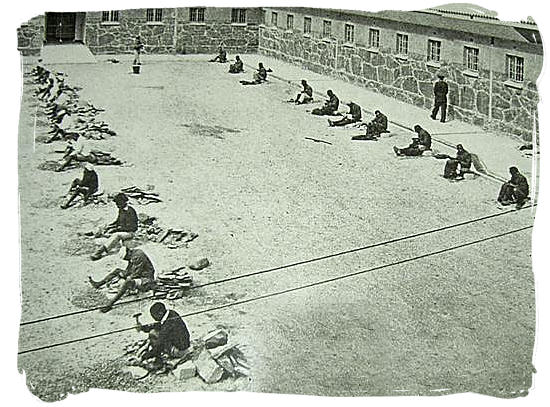
During the bus tour we learned that Robben Island had been used as a place of isolation for lepers, orphans, the blind, and other societal outcasts of the time even before it became home to the prisons.  It was later used during World War II, and most famously became the home of Nelson Mandela during the majority of his 27 years of imprisonment.  The island is actually quite large, though we only saw a small portion of it.  We saw the homes and schools of the wardens and their families who lived on the island, the different prisons, a church, and the infamous lime quarries.  Our guide told us that the new South African constitution was born out of the lime quarries, through the conversations of those imprisoned there.  A large pile of stones sits at the entrance to the quarry where, at a reunion of the political prisoners, Nelson Mandela took a stone from the quarry and set it down - saying it served as a monument to the triumph of the human spirit.  The others there also did the same - and the pile of stones stands today to testify to that incredible resiliency.


When we arrived at the maximum security prison, we were shown the place by a kind faced man named Ntando Mbatha, who also served a prison sentence at Robben Island for his activism during the apartheid years.  He showed us the office where prisoners lost their identity and were reduced to a number - Mandela's was 466-64, (called four-triple six-four) meaning he was the 466th political prisoner to arrive during the year 1964.
We saw the censorship office where both incoming and outgoing letters were literally censored with scissors for anything that might be seen as political.  Sometimes prisoners or family members received letters with only the salutation and the signature remaining.  Mr. Mbatha showed us the library and told of the motto "each one teach one" - whereby prisoners committed themselves to educating one another and sharing in dialogue and discussion to keep the movement going even from behind bars.  We saw the prison yard, where sentries were armed with guns and the order "shoot and shoot to kill" and two layers of incredibly tall fences had snarling dogs in between to keep the prisoners away.  Even if a prisoner managed to get through that, only the ocean lay in front of them.  No one ever escaped...

We learned that political prisoners had no chance for parole - their sentence required them to serve their entire term in prison.  While Robben Island was only home to black and coloured male prisoners, many other activists were sentenced and imprisoned through other parts of the country, and many others died in the struggle and never even made it to their trial or to jail.  The prisoners on Robben Island faced torture, isolation, poor health, and extremely uncomfortable living conditions.  They lost not only their freedom, but also their dignity.  What Mr. Mbata shared reminded me of a quote from a book I've been reading on this trip.  "Without dignity, identity is erased.  In its absence, men are defined not by themselves, but by their captors and the circumstances in which they are forced to live...Dignity is as essential to human life as water, food, and oxygen.  The stubborn retention of it, even in the face of extreme physical hardship, can hold a man's soul in his body long past the point at which the body should have surrendered it.  The loss of it can carry a man off as surely as thirst, hunger, exposure, and asphyxiation, and with greater cruelty." ~Unbroken, Laura Hillenbrand.  Amazingly, the men of Robben Island were able to maintain their dignity not only to survive, but to thrive for themselves and create an incredible new country.


As we neared the end of the tour, we saw the courtyard of Block B where a famous propaganda picture was taken (above), and where Mandela tended a garden in which he buried a copy of "Long Walk to Freedom."  It was found by guards and Mandela was punished, but fortunately it was the second copy Mandela had written.  The first copy had already made it out.  We ended our tour at the cell where Nelson Mandela spent 18 years before being moved to other locations until he was finally released in 1994.


While it is sobering to see a place where so much hope could have been lost, and so much bitterness fostered, Robben Island is instead an incredible monument to forgiveness and reconciliation.  Mr. Mbatha shared that despite the suffering the prisoners endured, they never talked of their suffering and they bear no hatred.  instead, they worked to move forward in a spirit of peace.  Robben Island now stands as a reminder of what was, and an urgent monument to what should never happen again.

We headed out on our return trip to the V&A Waterfront, our minds full of all we had seen.  While sitting and staring at the bay in front of us, we were surprised to see seals swimming along side the boat.  Then, there was a puff of air out of the water, and we realized that we were traveling beside 5 whales!!!  It was incredible to watch their backs and their tales glide through the water - a further symbol of beauty even in the midst of the pain that has been experienced here.

Tonight we'll be sharing dinner with the president of a local college in Cape Town, and I'm really looking forward to getting to chat education with him and his family.  I'm so thankful for the depth and fullness of this experience as I come towards the end of my time here!

~emily~


Wednesday, June 25, 2014

Day #12: From Constitutions to Conversations

Today I'm feeling a little bit of information overload, but it's been another great day of learning here in Cape Town!  So much rolling around in my head tonight, but I'll try to connect it all into something to share!

After breakfast, we headed on a train and up the coast to Cape Town's city center.  We found our way to South Africa's parliament building (after multiple tries and being sent to multiple different doors), where we joined 5 others on a tour.  2 of the others on the tour were South African, two were visiting from the U.K., and one was an American Peace Corps Volunteer in Lesotho!  So fun to compare stories from our service!

The tour was led by a South African law student and was very interesting and informative.  In many ways, I can see the influences of British systems on both SA's and the US's current governement.  Like the US, SA has a bicameral parliament system, as well as three branches of governement.  The two branches of SA's legislative branch are the National House of Provinces and the National Assembly.  Where the legislative branch once had supreme authority, the new Republic of South Africa has given its new constitution supreme authority.

The National House of Provinces is made up of 10 delegates from each of the 9 provinces, and delegates vote in a block for the wishes of their province.  The National Assembly is made up of representatives from the parties that make up the multiparty government, with seats given proportionally by the vote.  (In the last election, the current party in power, the ANC, got 62% of the seats.)  Representatives from different parties sit across from eachother, with the Speaker at the front of the group.  In all houses the public is welcome to obtain a free ticket and observe the congress in action, and proceedings can take place in any of the country's 11 official languages.  Translators sit at the ready to keep the dialogue moving and record the proceedings in all of the languages.

We also had the chance to sit in the old National Assembly building.  Because it is no longer used for official parliament business, we were able to sit in the chairs on the floor.  For a brief period of SA's history, there was a tricameral legislature, made up of some of the different racial groups: Whites, Indians, and Coloureds.  Black South Africans were excluded all together.  It was in this building that one of those groups met.  Interestingly, this section of parliament was built as closely as possible to England's House of Commons.  (The Brits in the group said it looked just like it!)  It was in this room that the majority of Apartheid laws were passed, as well as the site of the only assassination of a prime minister.  One of the other visitors asked why they keep this building - a place where so many awful Apartheid laws were allowed to make South Africa into the place it had become.  (Remember, since at that time parliament had supreme authority, any law that followed proper procedure could be passed - no checks and balances...)  Our tour guide had a great answer.  He said that you can't just wipe out history.  It's important to remember what happened here, to be sure that it never happens again.  So, the house still stands as a reminder for what SA once was, and what it should never be again.

In 1994, everything changed for SA. The New Democratic Republic of South Africa was born.  The new constitution became supreme, the law changed - adopting traits from Dutch, British, American, Indigenous, and International law.  All of the old pictures were taken down, and African tapestries were hung on the wall instead.  The official symbolic tools, the gold mace and the black rod, were redesigned to reflect the new SA and everyone's part in it.  It became a democracy built on the principles of forgiveness and reconciliation.

So - a very interesting look at the governemental side of things here in South Africa.

From there, we caught a train and headed just out of the city to visit with a college professor named Peter, the head of the education department at the school.  Since the timing of my trip coincided poorly with the school term, it wasn't possible for me to visit any.  But, I've been able to see many from the outside, and talking with this knowledgeable professor of education was the next best thing!

This conversation brought yet another snapshot into the experience of another South African - this time with an added focus on the education side of things that I'm so interested in.  We talked for hours, but I'll try to share objectively on some of my biggest insights:

  • Peter attended a segregated school, growing up in the Western Cape.  He described that the white school was on one side of a valley, the black/coloured school was on the other, and "never the two shall meet."  He finished his schooling in 1983.
  • In the segregated schools, the quality of education in the white schools was far superior to the education received in black or coloured schools.
  • Peter referenced the uprisings in Soweto, 1976 as a pivotal point in education in SA.  At the time, he as teaching in a segregated school.  For him, this was the beginning of many changes to come.
  • In 1992, schools became open to all races.  Peter described this as intentional desegregation.  When pushed further, he said this usually meant that black or coloured students would "cross the road" and join the white schools.  It rarely went the other way around.  Additionally, it was often only the upper class black or coloured students who would be able to afford the fees needed to actually switch schools.  (Even government/public schools in South Africa require uniforms and text books to be purchased and school fees to be paid)  Peter also shared the pattern than often followed "desegregation": the students of color would come to the school, and it would be multiracial only briefly, until the white families left the school, and moved on to a more white school.  In this way, many of the schools that used to be "white" have few white students left in them.  What was supposed to bring everyone together, just shifted everyone one school "up the ladder"
    • This observation was also shared by the teacher I talked with during my visit to the Slave Lodge musuem
  • In 1994, with the new government, everything changed.  Education policy was "passed around like a football," and the curriculum underwent major revision.  Whereas formally, each province would set their own curriculum (differening not only by province but also by race group), now there was a push for a more universal curriculum shared by the entire country - the same for all children regardless of race.  Peter feels that this has generally lowered the quality of education across the countries (the score required to graduate on the national exam is only 30%), and now many private schools are being created to teach a "more rigorous" (and expensive) curriculum.  So, a divide still exists...As in America, wealth gives access to resources - plain and simple.
  • The post apartheid years also brought about painful changes for Peter.  As schools were combined, losing their unique identities but becoming more open to all, staffing ratios intended to diversify the teachign staff left Peter (a white male) without a job.  He dealt with unemployment three different times during that period, finding it nearly impossible to find or keep a job based on his race.  He speaks without biterness about this, but acknowledges the difficulty it brought to him and his family.
  • Peter shared that today, there is a direct line between wealth (which, in SA, also breaks down along racial lines) and success in school.  The more expensive the school, the better resources, the better perform the students.  While good education is now legally open to all, the realities of what one can pay and how one gets admitted still excludes many people from an ability to access quality education.
  • I also learned some disheartening statistics from Peter - of the 1 million South African children in the system each year, only half make it from kindergarten all the way through grade 12.  Of those, only 67% pass the graduation exam nation wide.  Although school is compulsory until age 15, millions of kids leave school long before that.
  • Peter has a lot of hope for the younger generations, known here as "born-frees" because they have not lived under the Apartheid system.  He feels that they are the most open when it comes to race issues, and it will be them who will bring even more change to SA.
  • When I asked Peter to speak from his experience in SA and share advice for America's educational system, he emphasized learning from the example set here.  He emphasized the importance of reaching out to families and teaching students the values of diversity at a young age.  He shared that when jobs must restructure, people must move on.  He said that everyone benefits personally from a more open society.
So - lots to think about and absorb.  I have lots of thoughts about what I learned and how I percieve the information I've gathered, but I'll just save those for another night.

We ended our evening at the home of a college acquaintance, who shared a great meal with us and yet another picture into another life lived here in South Africa.

Tomorrow we'll head to Robben Island, and later spend some time with the president of a local university.  I know I will continue to see new perspectives, have more stories shared, and absorb these experiences.  What a crazy great learning adventure!

~emily~


Monday, June 23, 2014

Day #10 - As South as I can go!

Today we had a little bit of down time, and took the chance to explore more of the beautiful Cape region!

After waking up to a beautiful view of the harbor, we ate breakfast and headed out to explore Boulders Bay and Cape Point.


Boulders Bay is home to a colony of 3,000 African penguins!  It's so fun!  After a near fatal incident with a rock hyrax (just kidding, they are just as nice as they look!) we headed down a boardwalk through the protected area where the penguins can breed.
I found myself peering into the bushy areas, trying to spot penguins.  I got excited at each one I saw - lots of young ones too - and thought that I'd done pretty well for myself at penguin spotting.  Little did I know, there was more to come!  Along the path, the boardwalk opens up to a beach where there are literally dozens and dozens of penguins lounging, sunbathing, waddling around, and jumping into the sea!  It was so fun to watch them!

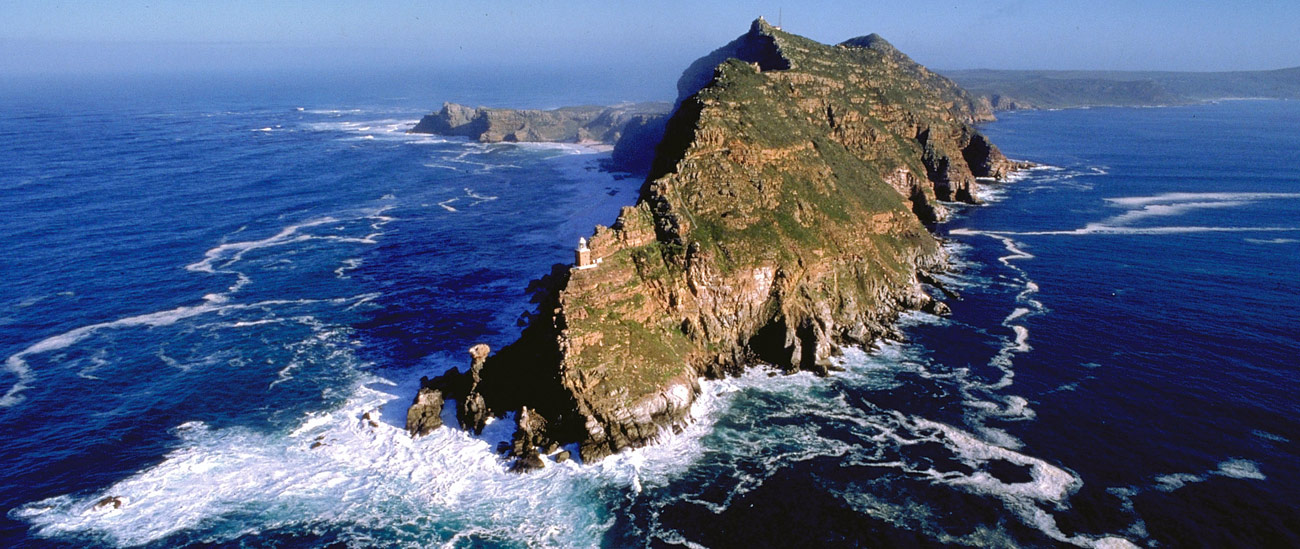
Then we headed even further south, towards the most south western point of Africa - Cape of Good Hope.  The trip south is filled with spectacular views - there is beauty literally every direction you look!  After arriving at the national park there, we started with a walk up to a lighthouse.

Strangely enough, after its construction it was realized that the lighthouse was actually too high, and could never be used!  What a disappointment!  But - it's a fun walk with amazing views of the ocean in every direction.
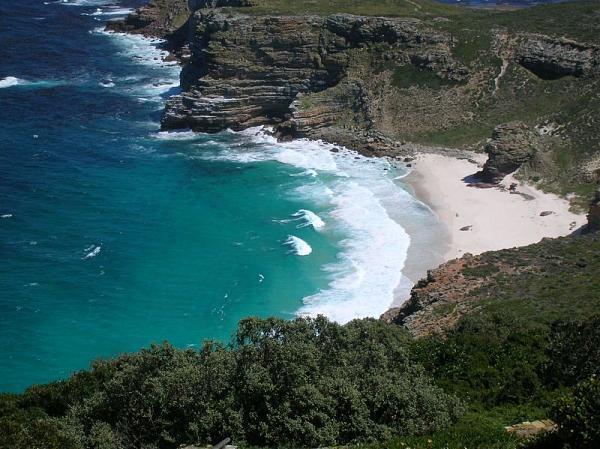
Then we took the hour and a half hike to the Cape of Good Hope - the furthest southwest point in Africa.  On the way, we stopped at the breathtakingly beautiful Dias beach and even got to see some surfers out on the waves.
Then, up and down and up again until we reached the Cape of Good Hope.  There were lots of tour buses there (the hike was definitely the less popular option for reaching the Cape!) but we managed to sneak in a picture and enjoy the view a bit!

The Cape coastline in this region is home to surfers, shipwrecks, and even whales in the midst of their migration.  Although its popularly believed to be the spot where the Atlantic and Indian oceans meet,this is actually a misperception (that spot is located at Cape Agulhas).  It is however a fabulous place to see - I'm so thankful that it became part of my experience of diving in to South Africa in the midst of this adventure!

After coming across a baboon roadblock, we snacked on a picnic lunch at Buffels Bay.  I think we were both a little petrified of the baboons coming to find us (there are signs everywhere extolling their dangerous nature!), so we ate fast and made a quick escape.  More hyraxes there too, but they are most cute than intimidating! :-)

Another truly incredible day - just immersing myself in the wonder and beauty of this amazing place!


Tonight we'll have an early night in preparation of hiking Table Mountain tomorrow.  I'm super excited to reach the top of this iconic Cape Town mountain!  Let's hope we make it! :-)

~emily~

Sunday, June 22, 2014

Day #9: Moving on over!

In my attempt to visit a lot of areas of the Johannesburg and Cape Town region, today we traveled to our final home away from home for the trip - Kalk Bay.  From here, we'll venture into the experiences I have planned for the second week of the trip - hiking Table Mountain, visiting Robben Island, connections with 3 educators and one community activist, and touring parliament.


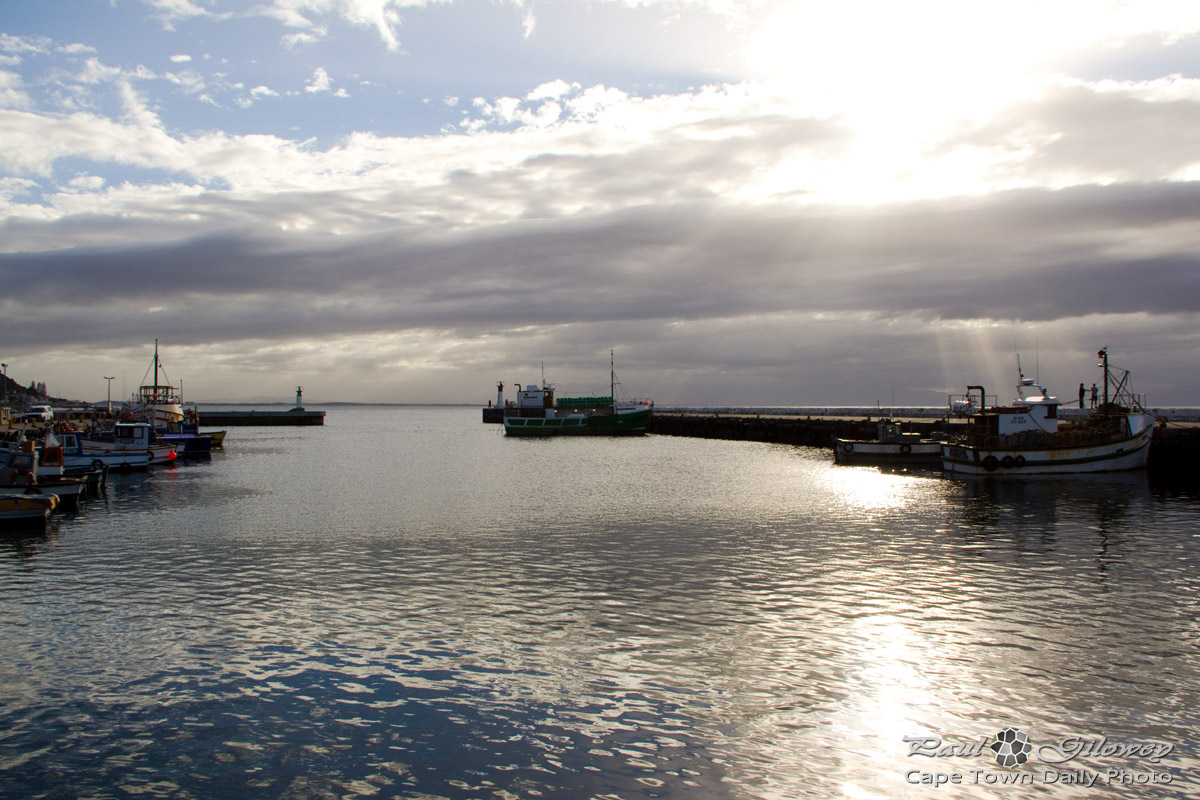
Kalk Bay is incredible - it's one of the quaint little communities nestled in the coves of the coastline of False Bay.  To get here, we took a breathtaking scenic drive through the vineyards, along the coast, and past the mountains.  This is an incredibly beautiful place!!!


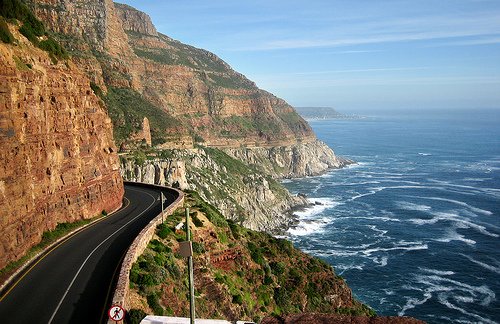
One of my favorite roads we took to get here was the drive by Chapman's Peak.  The mountain overlooks Haut Bay, and we drove along it right as the sun was setting.  It was stunning!!!  (Lots of pictures to come!)  We also had the chance to stop at a local market where community members sold hand made crafts (if only my carryon was larger!)

Now we're settled into a lovely hotel overlooking the sea.  It's beautiful!  We'll fall asleep tonight to the sound of waves crashing on the bay!!!  The train station is literally just across the road, so it will be super easy to navigate our way around exploring over the next week.  The way my schedule and the schedule of those I'm meeting with has worked out, I've packed a few of the days super full with visits and experiences, so tomorrow we have a little down time.  I think we'll head south and visit Cape Point, one of the southernmost spots in Africa.  From what Ryan tells me, we might even get to visit a beach with penguins.  Can't pass up that opportunity!

Thanks for following along!  More updates soon!

~emily~

Days #7 - 8: Reflecting


Friday June 20 & Saturday June 21

I thought I'd open this blog with the view that has greeted me each morning that we've been in the Stellenbosch area.  It is incredible here - we're just a few kilometers out of Stellenbosch but a world away.  It is quiet, serene, peaceful, and beautiful.  I think some of the heaviness of the last week's learning has started to catch up to me a bit, and I feel like this change of location and a little bit of quiet time has been helpful just to reflect, write, and make connections with all that I've taken in since we've been here.

Although I had originally planned this portion of the trip to connect with contacts shared with me as I planned the grant, as so often happens in life and in travel, the universe had other plans for me!  Yet I was still able gain a lot of insight being here (when you keep your eyes open, you can learn everywhere and anywhere!), and also immerse myself in the beauty of another part of the Cape region.

One night this weekend, I was able to have the chance to share a long evening of conversation with a few South Africans living in the area where we were staying.  One, a man in his 60's named Ron, the other a female Masters student who is 28 - the same age as I am - named Sara.   Both of them are white South Africans.  Despite their different European  heritage, both identify strongly and singularly as South African.  As we shared conversation over wine and bread and the course of many hours one evening, I was given a really vivid picture of the South Africa of each of their experiences. I'll do my best to objectively share about what I heard in their stories...and maybe editorialize a little bit at the end! :-)

Ron grew up in South Africa, then traveled to Britain for school, and decided to stay there for a bit.  He eventually married a German woman, and moved to Germany to live with her and raise their children.  He came back to SA when his marriage ended, and he's been here ever since.  He works in the government doing scientific work.  He speaks with what sounds to us like a very British accent.

Sara grew up on a rural farm near Durban - no electricity, no running water.  One of her parents is German, and the other was born in SA to German parents.  Sara's first language was german, but now she speaks, english, german, and afrikaans.  She's a botany student who is starting her masters and planning to do fieldwork in Mongolia.  (Fieldwork actually won't be her first time in Mongolia...she recently competed in a 1,000 kilometer horse race there, tracing the path of Genghis Khan!)   Sara shared a lot with us about her perspectives on race and culture in South African society today, and Ron also added his perspectives every now and again.

Sara talked of growing up without a concept of race.  To her, she didn't notice differences between skin color.  It wasn't until boarding school, when some of the black girls in her dorm called her a racist, that she went home to ask her mom about what racism was.  Sara started her schooling just as apartheid was being dismantled.  When she came to the University of Stellenbosch (less than ten years ago), all instruction was still being delivered in Afrikaans (remember, that's the language of the education that the students in Soweto were protesting).  She feels that her school experience had no influence of apartheid, and she also feels that even though it's only been one generation since the apartheid regime was in power, a lot of good development has happened in SA.  She implied that maybe its time everyone "moves on" from what happened during the apartheid years - it's been over 20 years now...Sara shared that some of the wealthiest people in the country are now made up of the black Africans who only twenty years ago were deeply oppressed by apartheid.

Sara spoke with deep reverence for president Mandela - sharing that he united the entire country and did tremendous things for South Africa.  She said she thought Mandela's death was bringing everyone back to the realizations of all he did here, and the incredible man that he was.  She also shared that she feels that the leaders since Mandela have not been able to make nearly as much progress.

Sara's perspective is that the government has worked very hard to create opportunities for groups who had been oppressed, and that this has resulted in a lot more opportunities for people who once had no chance to thrive in the South Africa of apartheid.  She shared that some white South Africans are now finding it harder than ever to find a job, as everyone must check a box that correlates to their race, and preference is often given to black or coloured applicants. She was definitely frustrated with this perception, and Ron chimed in with his agreement.

I found their story to bring to mind conversations I've had and stories that have been shared in the US - a lack of identifying or "seeing" race or color (I believe this is an attribute of white privilege), frustration with what might be seen as affirmative action, even a bit of resentment for the shifting power structure in the country.  I just can't help hearing echoes of experiences and conversations I've had in America as I hear people here share their stories.  These were just two South Africans sharing their experiences, but there are so many connections to be made, and I can't stop myself from wondering how we all can have the courage to look back at issues of race in our countries and use them to move forward into a more reconciled future...

Maybe it's a good time to explain a little bit about race here in SA.  Here, most people (at least traditionally) identify their race as white, black, or coloured.  White South Africans may descend from Europeans - British or Dutch colonialists, European immigrants, etc.  Coloured South Africans tend to be lighter skinned and have mixed heritage or descend from slaves brought to the region.  Black South Africans tend to be those whose families are more native to the region.  In the midst of apartheid, a strong (and legalized) racial hierarchy existed in soceity, with white at the top, coloured in the middle (the lighter you were, the closer to the top were), and black at the bottom.  On their passbooks, people were identified solely by their looks - certain attributes (straight hair, light colored eyes, etc) helped one "pass" as white, where other attributes (curly hair, darker complexion, etc) could earn you the stamp of coloured or black.  Even within the same family, sometimes one child might be identified as a different race than their siblings or parents, purely because of their physical appearance.  Just another piece of evidence of the social construction of race, and the shocking power it has had.

Today, as was the case during the apartheid regime, whites are in the minority population speaking.  Both Sara and Ron thought the white population to be around 20%.  According to wikipedia (terrible source, I know!), it's even less:
The 2011 census figures for these groups were Black African at 79.2%, White at 8.9%, Coloured at 8.9%, Indian or Asian at 2.5%, and Other/Unspecified at 0.5%.[15]:21 The first census in South Africa in 1911 showed that whites made up 22% of the population; it declined to 16% in 1980,[16] and 8.9% in 2011
Here's a map (wikipedia again!), showing the different parts of the country and their racial makeup.  It's worth checking out if you're interested.

So...a little bit of background, and the beginning of some qualitative snapshots of race, education, and life in South Arica.  As I said, the weekend played out much differently than planned, but it was enlightening and interesting all the same!

~emily~